Saint Martin Handwritten Font for Crafters & Sellers
If you’ve ever spent hours tweaking letter spacing on a wedding invitation—or stared at a candle label wondering why it just doesn’t *feel* special—then Saint Martin is the kind of script font that quietly solves more than you’d expect. It’s not just pretty; it’s purpose-built for makers who need beauty *and* function in equal measure.
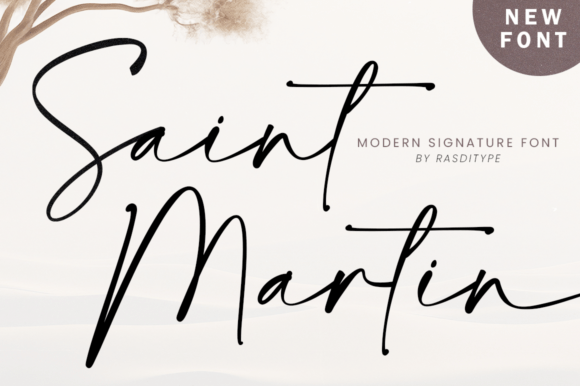
Saint Martin is a graceful, confident handwritten font from the Script Amp collection—designed with natural rhythm, subtle contrast, and that rare balance of elegance and approachability. Its letters flow like inked calligraphy but hold their shape beautifully at small sizes and on physical materials. There’s warmth in every curve, clarity in every terminal, and just enough personality to stand out without overwhelming your design.
Where Saint Martin Shines in Real Craft Projects
You’ll reach for Saint Martin when you want your product to whisper “handmade with care”—not shout it. It works especially well for:
- Wedding stationery: Welcome signs, place cards, and foil-stamped menus where legibility meets romance.
- Product labels & tags: Small-batch soap, honey jars, or boutique clothing tags—Saint Martin holds up crisply even at 8–10 pt when printed on kraft paper or matte sticker stock.
- Digital printables: Planner covers, quote posters, and printable wall art that customers download, print, and frame—its clean outlines prevent pixelation or blurring on home printers.
- Cricut & Silhouette projects: SVG files cut cleanly thanks to its well-structured vector outlines—no jagged edges or overlapping paths. I use it for farmhouse-style wood signs and vinyl decals for mugs and tote bags.
- Seasonal packaging: Think holiday gift tags, Easter egg labels, or summer farmers’ market signage—Saint Martin adds charm without looking dated or overly ornate.
Readability That Doesn’t Compromise Style
Let’s be honest: many beautiful script fonts fall apart on tiny stickers or narrow product tags. Saint Martin avoids that trap. Its x-height is generous, ascenders and descenders are open and uncluttered, and letterforms like “a,” “e,” and “s” retain clear counters—even at 6 mm tall on a mini tea towel tag. For laser-cut wood or engraved acrylic, it translates cleanly. On mockups, it previews accurately across devices—no surprise gaps or awkward kerning in your Etsy listing images.
That said, Saint Martin is best used for short, high-impact text: names, titles, quotes, brand slogans, and decorative headings. It’s not meant for body copy—but that’s exactly what makes it powerful as a display font. Pair it thoughtfully, and it elevates everything around it.
Smart Font Pairing for Consistent Branding
I almost always pair Saint Martin with a clean, neutral sans serif—like Montserrat, Poppins, or Lato—for product descriptions, ingredient lists, or fine print. The contrast gives hierarchy without visual noise. For vintage-inspired collections, I’ll use a soft serif like Playfair Display or Merriweather instead—keeping the mood cohesive but grounded.
The key is balance: Saint Martin brings voice and character; your secondary font brings structure and trust. Together, they build recognizable brand identity—whether you’re designing a full stationery suite or just updating your shop banner.
What’s Included & What You Can Do With It
Saint Martin comes with OpenType features that matter to makers: standard ligatures (so “fi” and “fl” connect smoothly), stylistic alternates (for customizing initials or monograms), and swashes for opening letters—perfect for elegant logos or signature lines on invitations. It supports multilingual Latin-based languages (including accented characters for French, Spanish, and German), which matters if you sell internationally or create bilingual baby announcements.
File formats include OTF, TTF, and web-ready WOFF—so whether you’re prepping an SVG cut file in Design Space, building a Canva template, or coding a Shopify product page, Saint Martin integrates smoothly. No missing glyphs, no rendering hiccups.
Commercial Use? Yes—With Clarity
This is critical: Saint Martin is licensed for commercial use, meaning you can use it to create and sell physical products (candles, apparel, prints), digital downloads (PDF planners, Canva templates), SVG bundles, client work, and social media graphics. You do *not* need an extended license to sell items made with Saint Martin—as long as you’re embedding it into your final product (e.g., a printed card) or converting it to outlines (e.g., in an SVG file). You may not resell the font file itself or distribute it as a standalone download.
I keep a note in my design checklist: “Saint Martin → outlined before export.” It takes two clicks in Illustrator or Inkscape—and ensures every sticker, sign, or printable ships with perfect fidelity.
Why It Fits Your Shop—Not Just Your Mood Board
There’s a quiet confidence in Saint Martin. It doesn’t try too hard. It doesn’t distract. It simply makes your handmade goods look considered, intentional, and worth the price point you set. Customers notice that—even if they can’t name why. A well-chosen script font like Saint Martin tells them your brand values detail, respects tradition, and understands modern taste.
Whether you’re printing 50 wedding napkins or uploading your tenth printable bundle this month, Saint Martin stays versatile. It feels personal on a handwritten-style birthday card—and polished on a luxury skincare label. It’s the kind of typeface that grows with your shop: useful today, timeless next year, and still relevant five seasons from now.
If your current script font feels either too stiff or too fragile, give Saint Martin a test run on your next label mockup or invitation draft. See how it breathes life into plain layouts—and how easily it becomes part of your creative rhythm.